Hilton’s Electronic Security installs home alarm systems for families across Central Pennsylvania, and the one that works is the one that gets armed. Plenty of houses have a panel by the door that nobody has touched in three years, usually because it went off twice at 2am for no reason or because arming it turned into a chore. A system laid out properly around the house, with sensors where they belong and a way to arm it without thinking, stops being a nuisance and starts being useful.
Every house has its own weak points, and they are rarely the front door. It is the sliding door onto the deck that anyone can see from the alley, the basement window behind the hedge, the garage door into the kitchen that stays unlocked, or the side of the property nobody overlooks. Those are the points a break-in uses, and those are the points the system has to cover.
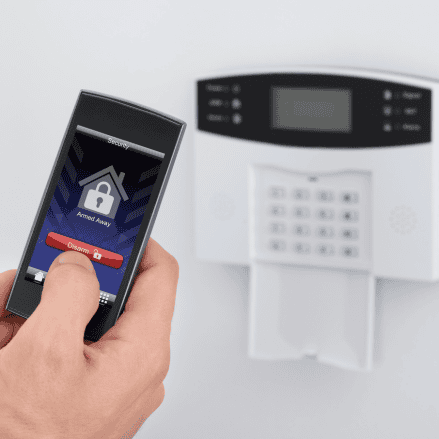
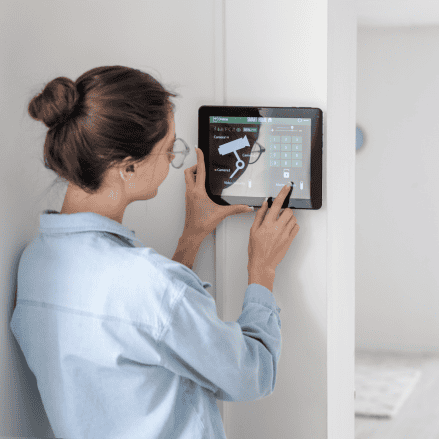
We walk the house before quoting, look at how the family actually comes and goes, and place contacts, motion detection, and glass break where they will catch a genuine entry rather than the dog or the heating vent. Then the arming is set up to suit the household, with a keypad where people actually enter, a phone app for everyone else, and modes that let you secure the perimeter while the kids are still upstairs. That last part is what keeps a system in daily use rather than switched off by spring.
An alarm quote often looks like a list of parts, which tells you very little about whether the system will suit the house. The value sits in the layout, the programming, and the handover, and those are the pieces that decide whether your family finds it easy or gives up on it. We handle all of it as one job.
Most of what a home alarm does day to day has nothing to do with a break-in. It tells you the back door opened while you were upstairs, it lets you check the house is armed from the car, and it gives an elderly parent a panic button that reaches someone immediately. The intrusion protection is the reason people buy it, and the rest is why they keep using it.
Contact Info
Have a question or need a quote? Reach out — our team is ready to help protect your business.
Alarm questions from homeowners are almost always about living with the system rather than the hardware inside it. These are the ones we answer most often, covering monitoring and what happens when it trips, pets and false alarms, whether an existing panel can be kept, monthly costs, wireless against wired sensors, and what happens in a power cut or a phone line failure.
The panel sends the signal to the monitoring center, which calls the house and then works through your contact list before dispatching. You are notified on your phone at the same time, so you often know what has happened before anyone reaches you.
Not if the system is laid out for a household with pets. Motion detection can be positioned and specified to ignore movement below a certain height and weight, and in rooms where that is not practical we use contacts and glass break instead. Tell us about the animals during the walkthrough.
Sometimes. If it is a current line that is still supported, reprogramming and adding to it is usually cheaper than replacing it. Panels from discontinued systems tend to cost more to keep running than they are worth, and we will tell you plainly which one you have.
Monitoring carries a monthly fee. The equipment and installation are quoted separately, and we break both out so you can see what is one-time and what is ongoing. A system can run unmonitored if you prefer, though you lose the dispatch.
In an existing house, wireless is usually the sensible answer, since it avoids opening walls and the batteries last for years. New construction and major renovations are the point where wired makes sense, because the cable can go in before the drywall.
The panel runs on battery backup through an outage, and it reports over a cellular connection rather than depending on your internet or a phone line. A cut line at the outside of the house does not take the system down with it.
Tell us about the property, who lives there, and what has you thinking about it. We will come out, look at the entry points, and quote a system sized to the house rather than a package. If you already have an alarm the family stopped using, we will find out why and tell you whether it is worth fixing.