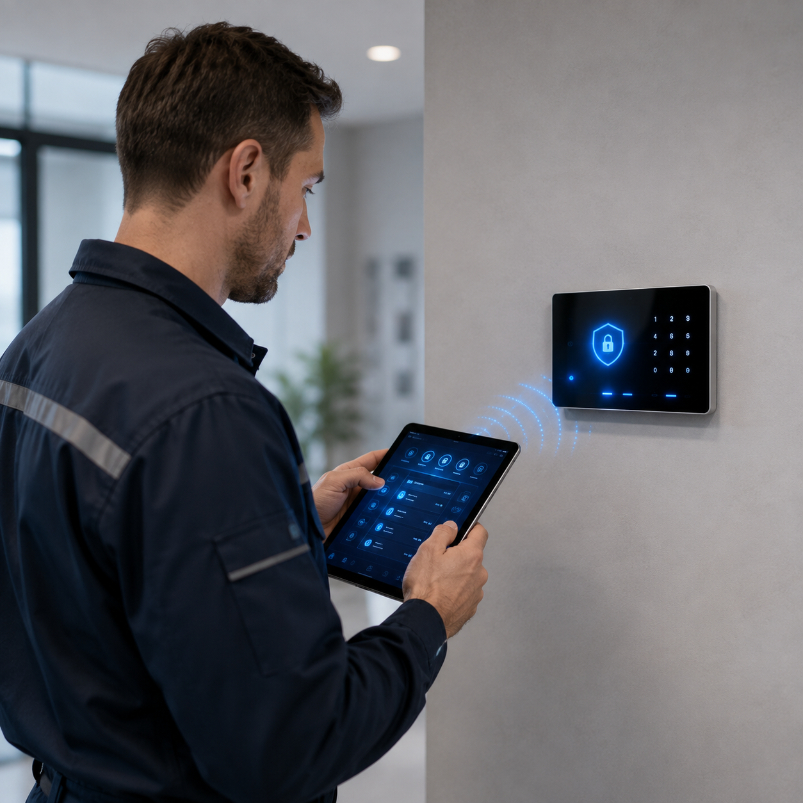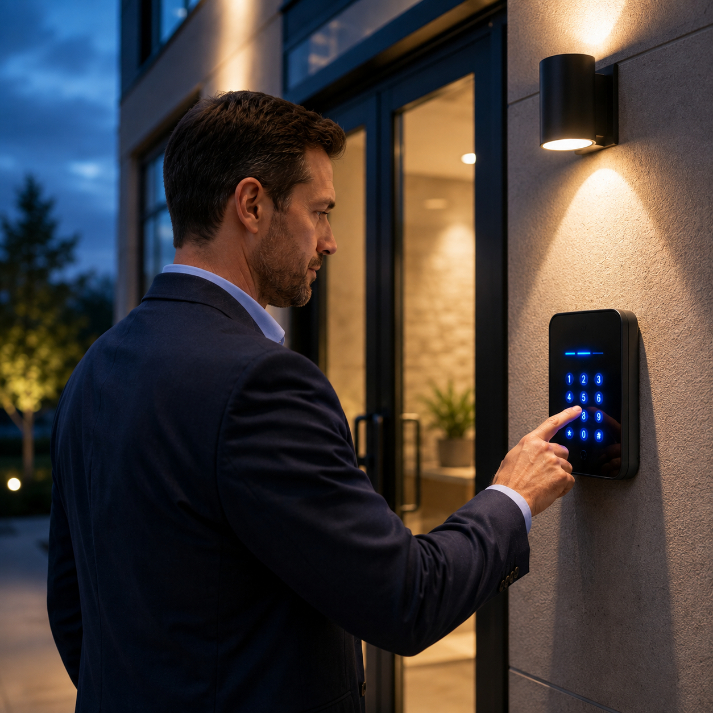
Hilton’s Electronic Security installs commercial alarm systems for businesses across Central Pennsylvania, from single offices and retail units to warehouses, schools, and multi-building sites. Every system is laid out from a walk of the building rather than a package sheet, because where the detection sits decides whether the alarm is useful or just loud. The aim is one your staff will actually arm every night, and that tells you something specific when it goes off.
A commercial alarm earns its place when the response to it is fast and specific. That depends almost entirely on how the system is zoned. A single-zone alarm tells you something happened somewhere in the building. A properly zoned system tells you it was the rear fire door at 2:14am, which is the difference between a useful call and a guess.
Our technicians work out where the real entry points are, which interior areas need cover once someone is inside, and where detection will trip on a delivery driver or a heating duct rather than an intruder. Devices are then selected and placed to suit each of those conditions, so the system stays quiet when it should and reports clearly when it matters.
An alarm project involves more decisions than the panel on the wall suggests, and most of them are made before anything is mounted. Here is what we handle across a standard commercial installation.
Alarms are often bought on price and then disarmed permanently within a year because they cause more trouble than they prevent. Specified correctly, the same budget produces something the business keeps using.
Contact Info
Have a question or need a quote? Reach out — our team is ready to help protect your business.
Alarm questions usually come up after a false alarm, a break-in, or an insurance renewal. These are the ones we answer most often, covering monitoring and what happens when the alarm trips, keeping false alarms down, working with an existing panel, arming a building that is never fully empty, what it costs to run, and how the alarm fits with cameras and access control.
The panel reports to the monitoring center, which verifies the signal and contacts your call list and the authorities as appropriate. Where cameras are integrated, the event can be checked visually before anyone is dispatched, which cuts wasted responses.
Most false alarms trace back to placement and programming rather than faulty equipment. Detectors aimed across airflow, doors with a delay set too short, and staff without proper codes account for the bulk of them. We address all three at install and will come back and retune if a pattern appears.
Sometimes. If it is a current commercial line that is still supported, we will often reprogram and expand it rather than replace it. Older panels from discontinued lines are usually not worth the cost of keeping alive.
Yes. Partial arming covers perimeter doors, storage, and unoccupied floors while staff continue working elsewhere. Schedules can be set so different areas arm at different times automatically.
Monitoring carries a monthly fee, and the amount depends on the number of accounts and how the system reports. The equipment and installation are separate. We will break both out on the quote so nothing is buried.
Yes, and it is worth doing. An alarm event can pull up the relevant camera view and lock or release doors automatically, which turns three separate systems into one response.
Tell us what the building is, how many doors it has, and what hours people are in it. We will come out, map the zones, and quote a system sized to the property instead of a package. If you already have an alarm that nobody arms, we will look at why.