
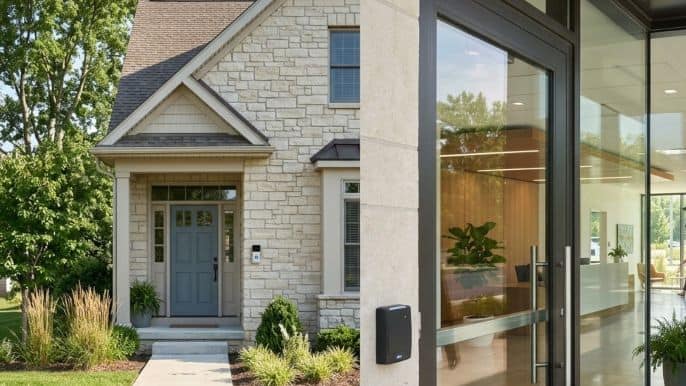
Residential and commercial security systems share the same goal, protecting people and property, but they are built for very different jobs. A home system guards a family and their belongings, usually with a few cameras, door and window sensors, and a simple keypad. A commercial system protects employees, customers, inventory, and sensitive data across larger buildings, more entry points, and longer hours. Commercial setups use heavier-grade equipment, per-person access control, professional monitoring, and features that meet industry rules. They also cost more, for good reason. This guide breaks down the main differences in scale, equipment, access, monitoring, compliance, and cost, and shows how the risks differ for homes and businesses in Carlisle, Harrisburg, and Mechanicsburg, so you can choose the right system for your property.
At the core, both system types do the same three things. They deter people who should not be there, they alert you and the authorities when something happens, and they keep a record you can review later. Both can include cameras, door and window sensors, motion detectors, alarms, and remote access from a phone.
If you are weighing this for a business, see how Hilton’s handles business security systems across Central PA.
A provider like Hilton’s Electronic Security installs both kinds across Central PA, which makes the differences easy to see side by side. The split shows up in scale, build quality, and the rules each one has to follow.
Homes and businesses face different risks at different times, and the data shows it clearly.
According to the FBI, residential properties made up about 52 percent of all burglaries in 2024, with roughly 405,776 incidents. Most home break-ins happen during the day. The FBI’s 2024 data shows daytime residential burglaries outnumbered nighttime ones, because homes sit empty during work and school hours. Businesses follow the opposite pattern. FBI data shows nonresidential buildings are more likely to be hit at night, after they close, with the late-night hours being a common time.
Businesses also face a threat that homes rarely do. Internal theft. The National Retail Federation’s 2023 National Retail Security Survey found that shrink, the loss of inventory, reached 112.1 billion dollars in 2022, and about 65 percent of that came from theft, including theft by employees as well as outsiders. A home system is built to keep intruders out. A business system also has to watch what happens inside, during open hours, among people who are supposed to be there.
One thing both share is that visible security works. A University of North Carolina at Charlotte study, led by criminologist Dr. Joseph Kuhns, surveyed 422 burglars and found that about 60 percent would pick a different target if they saw an alarm. About 31 percent of those surveyed preferred commercial targets, which is a reminder that businesses are squarely on burglars’ radar.
Here is a side-by-side look at the main differences.
|
Factor |
Residential security | Commercial security |
|---|---|---|
| Protects | Family, home, personal belongings |
Employees, customers, inventory, equipment, data |
|
Scale |
One property, a few doors and windows | Large buildings, many entry points, often multiple sites |
| Equipment | Consumer-grade, often wireless and easy to install |
Commercial-grade, built for heavy daily use |
| Recording | Event-based clips with cloud storage | Often continuous recording with local and cloud backup |
|
Access control |
A keypad or smart lock | Cards, fobs, PINs, or mobile access by person and area, with logs |
| Monitoring | Self-monitoring with optional professional backup |
Professional monitoring with a planned response chain |
|
Rules |
Local privacy and HOA limits | Industry rules like PCI DSS and HIPAA, plus audio-recording laws |
| Typical cost | Lower, packaged pricing |
Higher, custom design and equipment |
The sections below explain the differences that matter most.
Home equipment is made for light, occasional use. Many residential video surveillance and residential alarm systems are wireless, simple to set up, and record short clips when motion is detected. That is plenty for a house.
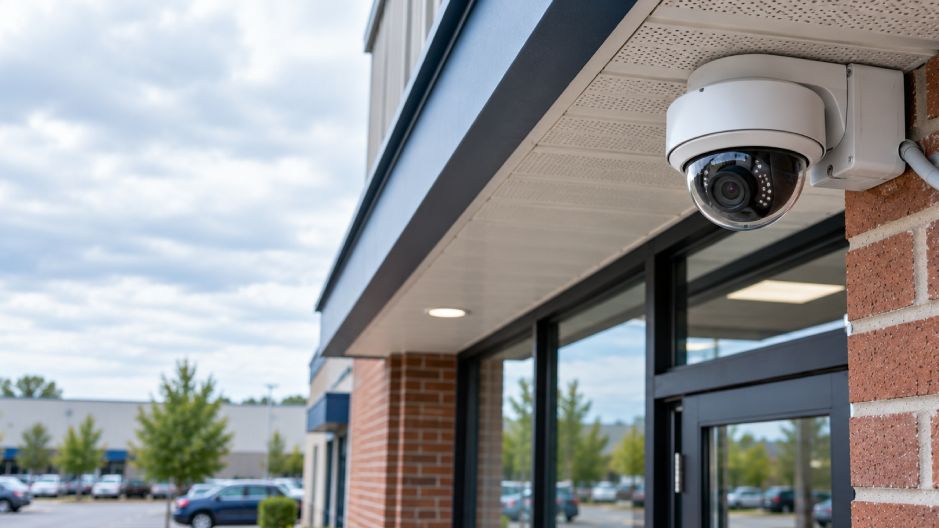
Business equipment is built to run hard. Commercial video surveillance cameras are made for continuous operation, often recording around the clock to local storage and the cloud at once. Continuous footage matters because it covers more than burglary. It documents slip-and-fall claims, register disputes, and other liability issues that a home never deals with.
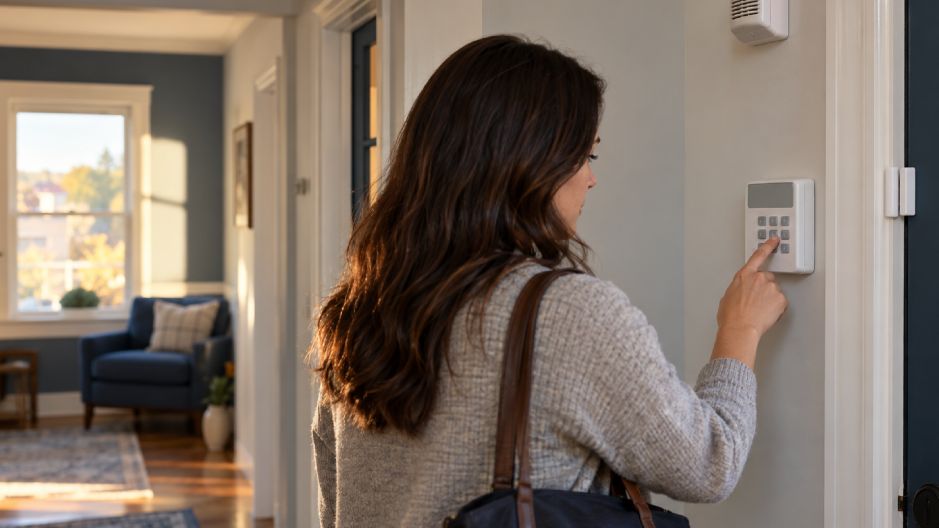
This is one of the clearest dividing lines. A home usually has one keypad or a smart lock that everyone in the family uses.
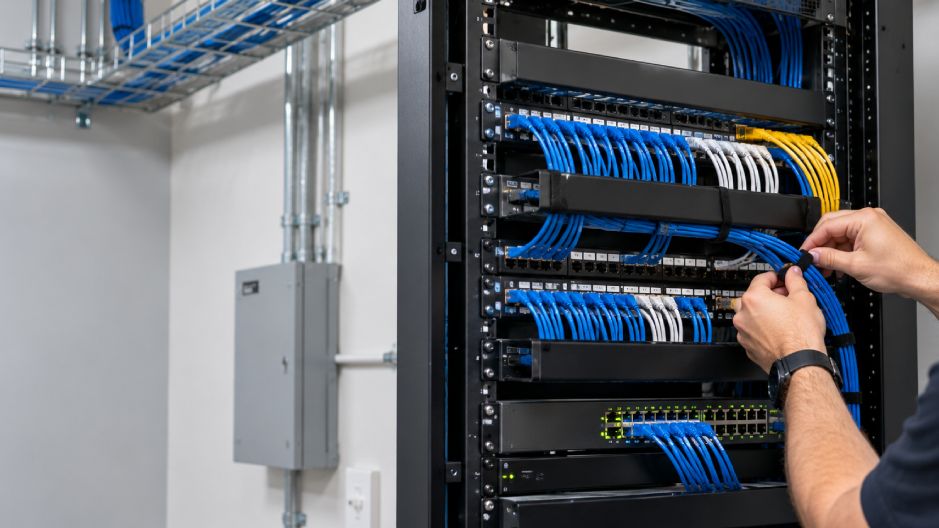
A business needs to control who enters which areas, and when. Access control gives each person their own card, fob, PIN, or mobile credential, and it logs every entry. A manager might reach the office and the safe room. A part-time worker might reach only the break room. When someone leaves the company, you remove their access in seconds, without changing locks. Homes almost never need this level of control, but for a business with staff turnover, it is a daily tool.
For a home, monitoring is often a mix of self-monitoring and a basic professional plan. A homeowner gets a phone alert and decides what to do, with the monitoring center as backup.
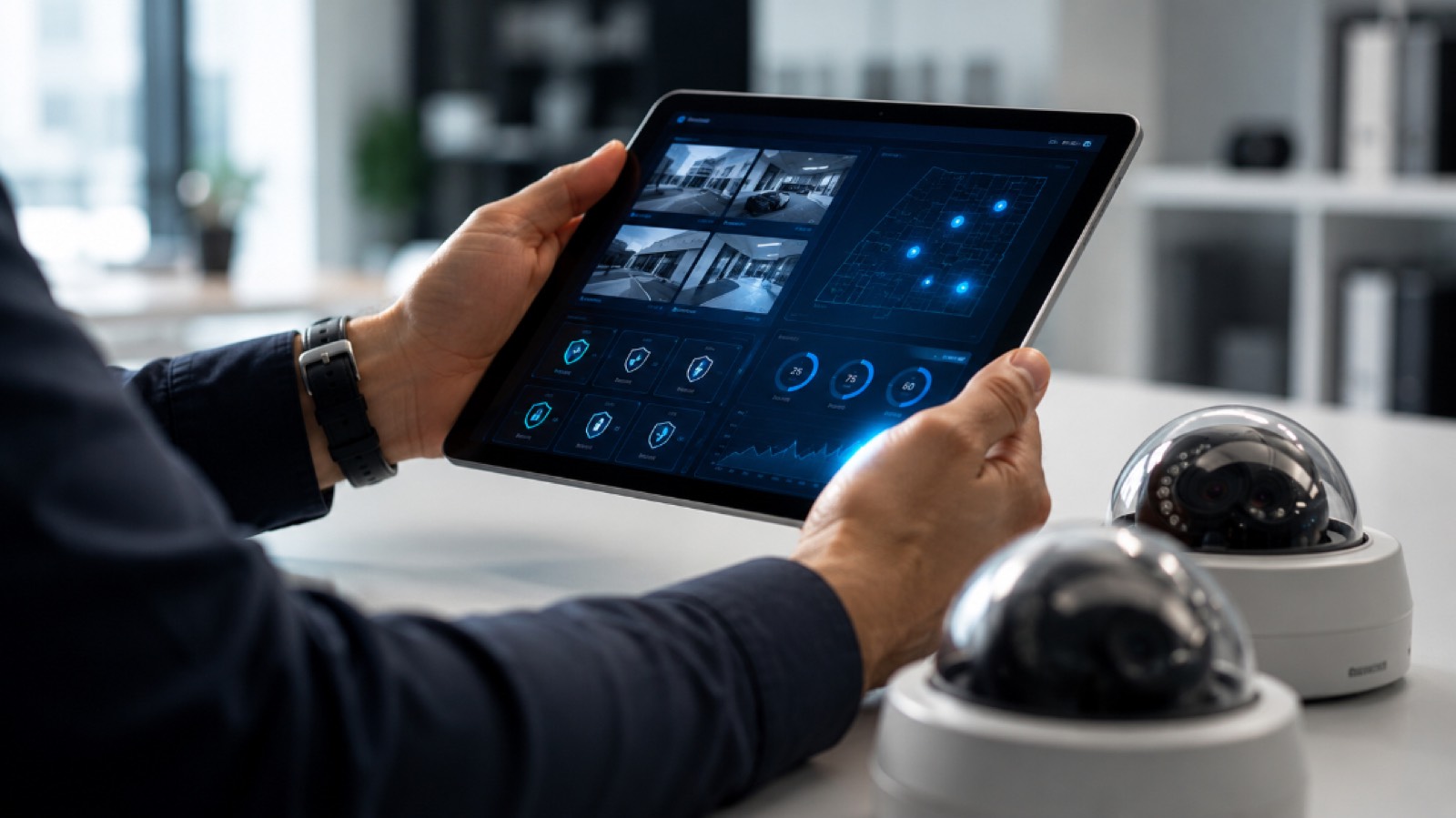
A business needs a planned response. When an alarm trips, a trained center can verify the threat and follow a set chain, such as calling a manager, then a second contact, then police. Verification is the key difference. When cameras confirm a real event, police treat the call as a higher priority, which leads to a faster response than an unverified alarm.
Homeowners face few rules. The main ones are local privacy limits and HOA guidelines, plus pointing cameras away from a neighbor’s property.
Businesses face far more. Retailers that process card payments fall under PCI DSS, which expects monitoring of payment areas. Healthcare offices fall under HIPAA, which expects access control and logging for areas that hold patient records. Audio recording carries its own legal limits, and businesses often must post notice. On top of that, many commercial insurance policies set minimum security requirements that shape how a system is designed. A home system rarely touches any of this.
Residential systems cost less because they cover less and use packaged equipment. Commercial systems cost more, but the reasons are practical. They use heavier-grade hardware, cover more square footage and entry points, need professional design and installation, and often include service plans with set response times. The higher cost buys durability, coverage, and support that a business depends on every day.
Sometimes, yes. A very small business in a single room, such as a small office or a one-room storefront, may do fine with home-grade cameras and sensors for basic coverage.
The limits show up fast as a business grows. Home equipment usually lacks per-person access control, continuous recording, planned monitoring, and the features needed to meet industry rules. A common middle path is to use simple cameras for basic monitoring while investing in commercial access control and alarm systems where it counts. The right call depends on your size, your hours, your assets, and any rules you must follow. A professional walkthrough is the surest way to decide.
Many people in Central PA own both a home and a business, and the two need different plans. A home in Mechanicsburg is most at risk during the day, so the focus is deterrence, entry sensors, and cameras at the doors. A storefront in Harrisburg or a warehouse near Carlisle is most at risk after hours and from internal loss, so the focus shifts to access control, continuous video, and monitored alarms.
Working with a local company that handles both residential and commercial security across Central Pennsylvania means one team understands the full picture. The same provider can secure your home with a simple, reliable setup and protect your business with a heavier, monitored system, each built for its own risks.
Residential and commercial security systems aim at the same goal but solve different problems. Homes need simple, reliable protection against break-ins that mostly happen during the day. Businesses need heavier equipment, per-person access, planned monitoring, and features that meet industry rules, all while guarding against both outside and inside threats. The data backs the split. Homes and businesses are hit at different times and in different ways, and the right system fits the risk.
Whether you are protecting a home, a business, or both in Carlisle, Harrisburg, or Mechanicsburg, the first step is a walkthrough of your property to match the system to the risk. Schedule a free security consultation with Hilton’s Electronic Security to find the right fit for your property.
Hilton’s Electronic Security serves businesses across Central Pennsylvania, including Carlisle, Harrisburg, Mechanicsburg, Camp Hill, New Cumberland and York.
Hilton’s Electronic Security designs and installs access control, cameras and alarm systems for businesses from Carlisle to Harrisburg. We walk the building first and quote what it actually needs.
Category :